General Court of the EU: Likelihood of confusion between A ASTER and A-STARS
In its judgment of 7 July 2015 (T-521/13) the General Court of the European Union decided that there is a likelihood of confusion between the signs
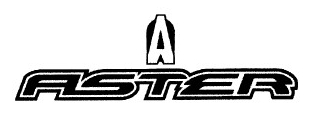
and A-STARS.
In the underlying case, registration of the Community figurative trade mark A ASTER as shown above was sought for backpacks, briefcases, handbags, cyclist clothing, etc. The applicant Alpinestars Research Srl filed a notice of opposition against this application based on its earlier Community word mark A-STARS, registered for identical and similar goods, claiming likelihood of confusion between the two signs.
To assess if there is a likelihood of confusion the Court compared the signs at issue taking in account visual, phonetic and conceptual aspects. Regarding the visual comparison, the Court pointed out that the signs were the same length and had four letters in common. The stylized letter “A” above the sign would be regarded as a graphic representation rather than as a letter. Additionally, the Court emphasized that in the case of a mark consisting of both word and figurative elements, the word elements must generally be regarded as more distinctive or even as dominant. Therefore, the Court concluded that the visual comparison entails an assessment of the similarities and differences between the word element ‘aster’ and the word mark ‘A-STARS’ and found an average degree of visual similarity between the signs at issue.
Furthermore, the Court argued that it was unlikely that the consumer repeats the vowel “A” in the mark applied for since the stylized element stood on its own and the two signs had similar sounds. The Court therefore took the view that also the aural similarity had to be assessed with respect to the signs “aster” and “A-STARS” and that the signs were highly similar phonetically.
Although the Court denied the existence of a conceptual similarity it held that there is a likelihood of confusion between the signs at issue. The judges argue that this is because the goods at issue are identical and point out the average degree of visual similarity between the signs and the high degree of phonetic similarity between them at least for the non-English speaking public. According to the Court, this is enough to assume the existence of a likelihood of confusion between the signs at issue.
Further reading: New EU trade mark regime takes shape; Lack of distinctive character of Louis Vuitton’s “chequerboard pattern”
Well
informed
Subscribe to our newsletter now to stay up to date on the latest developments.
Subscribe nowInsights