Financing battery energy storage: key legal considerations for investors and lenders
At a glance
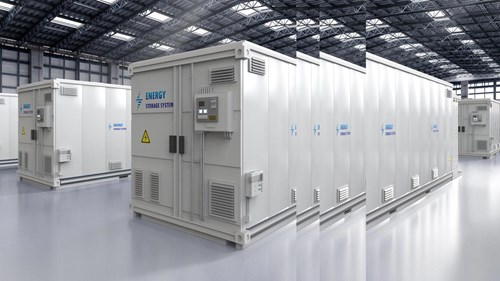
Developers typically finance battery energy storage systems (BESS) through non-recourse project finance structures using an SPV. Their volatile, market-driven reve-nues set them apart from wind and solar projects.
A BESS project’s bankability depends on its revenue model. Tolling agreements offer the greatest financing certainty, while fully merchant projects require significantly more equity and face stricter covenants.
The regulatory framework affects project economics and requires legal assessment early in project development.
A largely unrestricted grid connection, or at least a grid connection commitment, is fundamental to any BESS project.
Equity is a key component of bankable BESS financings. Investors may earn higher returns, but they also bear greater risks, particularly because they rank behind lend-ers and depend on volatile revenues.
Battery energy storage systems (BESS) rank among the key technologies of the energy transition. They add flexibility to the power system, help integrate renewable energy and open up new trading opportunities – from balancing energy through arbitrage to ancillary services. Financing them nonetheless remains challenging: unlike wind and solar projects, they lack long-term guaranteed remuneration. Revenues are volatile, market-based and hard to forecast. Whether a battery storage system proves bankable therefore also depends on how it is structured legally.
I. Financing structures: project finance and the non-recourse principle
BESS projects are typically structured as standalone project financings through a special purpose vehicle (SPV). The financing follows the non-recourse principle: lenders have no recourse to the shareholders and rely instead solely on the project’s cash flows and assets. Typical loan tenors run between seven and ten years.
The crucial difference from conventional renewable energy financing lies in the revenue profile. Where wind and solar projects often build on long-term feed-in tariffs, BESS revenues track dynamic market prices. That drives higher equity requirements, more conservative valuations and shorter loan tenors.
Typical features of the financing documentation for BESS projects include:
- Sculpted repayment matched to the batteries’ degradation curve
- DSCR covenants
- Cash-sweep mechanisms and restricted-payment clauses
- Augmentation reserves funding later capacity additions
The security package typically includes a pledge over the shares in the SPV, an all-assets assignment of claims under the material project agreements, pledges over bank accounts and a transfer of title to the facility by way of security. The last of these matters especially because batteries count as movable assets so lenders cannot take a mortgage over them. Securing rights in rem over a site is all the more important: without robust land, access and cable rights (usually secured through first-ranking limited personal easements in favour of the SPV and the lenders) financing cannot be structured. Reviewing site security is therefore a standard part of legal due diligence and deserves early attention, given how much it can delay a project.
II. Revenue models and bankability
A BESS project’s revenues typically rest on three pillars: ancillary services (notably FCR and aFRR), peak shaving and avoided network charges, and wholesale arbitrage. In practice projects combine these sources through revenue stacking. Prequalification requirements, state-of-charge management and technical constraints, however, limit how far they can do so.
The choice of revenue model decides whether a project is bankable:
- Tolling agreements offer the greatest planning certainty: the project company makes its storage capacity available to a counterparty and receives a fixed or partly variable fee.
- Fully merchant projects are in principle bankable, but lenders apply significantly stricter requirements: they limit gearing more tightly, require higher DSCRs and additional liquidity reserves, and expect developers to update their trading forecasts regularly.
- Hybrid floor structures strike a middle path, with loan-to-cost (LTC) ratios of 55–65%, for example through optimisation contracts with minimum fees.
Degradation is a factor that should not be underestimated: batteries lose roughly 2-3% of their usable capacity each year. The financial model should realistically reflect this technical risk, which should be mitigated through manufacturer warranties and an augmentation reserve. Beyond that, bankability requires technical due diligence, an independent revenue forecast, qualified project partners and confirmation that the project can obtain insurance.
III. Regulatory framework
The regulatory framework significantly affects a BESS project’s economics so developers must factor it into project development at an early stage.
Grid connection: A grid connection is fundamental to financing any BESS project. Transmission system operators and, increasingly, distribution system operators use maturity-based procedures to allocate grid capacity. Developers should clarify availability, connection capacity, costs and deadlines early. Flexible connection arrangements can make it easier to connect a project, but they may restrict how the project can operate. The grid connection contribution also represents a material investment and site-selection factor, as reflected in recent Federal Court of Justice case law (2025).
Exemption from network charges: Battery storage currently benefits from an exemption from network charges if it enters operation by 4 August 2029. The statutory deadline for new storage projects to qualify ends on that date. The German Federal Network Agency’s (Bundesnetzagentur) current draft determination on the general framework for electricity network charges adds a second, significantly earlier hurdle for grandfathering: the project must reach final investment decision before the determination is announced. Under the current draft, the Agency expects to announce it on 1 January 2027. Many projects may therefore face a decisive economic milestone as early as the end of 2026.
Building permits: Authorities may approve BESS projects as development in the open countryside under the rules for privileged development in German planning law, but only if they meet a strict set of cumulative conditions. Reviewing these conditions forms a material part of legal due diligence.
Redispatch duties create further regulatory risks. They allow network operators to curtail storage when needed, exposing projects to market risk that developers must reflect in revenue forecasts.
IV. Equity investments in BESS
As renewable capacity expands and negative-price hours increase, the power system needs more flexibility, making BESS an increasingly sought-after asset class. Given the high equity contributions lenders require, access to equity often determines whether a project can proceed.
Investor landscape: Developers typically invest equity until a project is ready to build (RtB) and then sell it. Infrastructure funds and institutional investors generally invest at RtB or when the project reaches commercial operation (COD), often on a turnkey basis. Strategic investors, such as utilities and municipal utilities, may also integrate storage into their portfolio management.
Return and risk profile: Investors typically target double-digit equity returns, higher than for conventional renewable energy assets. In return, they accept structural subordination to lenders, the risk that growing storage capacity will erode revenues, and limited liquidity over investment periods of 10-15 years. Revenue fluctuations and battery degradation directly affect distributions. With typical leverage of up to 70-80%, leverage can magnify returns or losses, potentially wiping out the entire equity investment.
Transaction structure: Investors typically acquire equity through a share deal in the project company (usually a limited partnership (GmbH & Co. KG) or private limited company (GmbH)). The SPV therefore retains grid access or its grid connection commitment, permits, project agreements and land rights; the transaction documents must protect these assets. Investors should also review change-of-control clauses. When acquiring projects during development, parties commonly use milestone payments and earn-outs alongside warranties. The Federal Network Agency’s draft determination on the general framework for electricity network charges may affect the timing of the final investment decision (FID) and, in turn, the transaction timetable. Buyers should also assess foreign investment screening under the German Foreign Trade and Payments Act and German Foreign Trade and Payments Ordinance (Außenwirtschaftsgesetz / Außenwirtschaftsverordnung) and merger control early, and build any required reviews into the timetable.
V. How we can help
Our Banking & Finance and Energy & Infrastructure practice groups have extensive experience structuring and advising on BESS financings and equity investments in battery storage, from initial feasibility assessments and contract negotiations through to financial close. We advise institutional and infrastructure investors, as well as lenders, on bankable financing and security packages, M&A transactions and regulatory due diligence. We also regularly help developers bring bankable projects to market.



Well
informed
Subscribe to our newsletter now to stay up to date on the latest developments.
Subscribe nowInsights