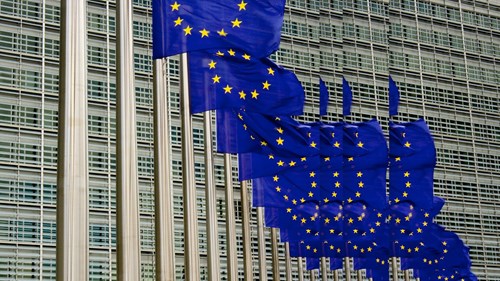
Council of the European Union defines new priorities in the fight against organized crime
Every four years, the Council of the European Union defines topics that are to become the focus of criminal investigations and political attention in the coming years.
On 13 June 2025, it adopted the new priorities in the fight against crime for the period 2026 to 2029. The aim is to fight organized and serious cross-border crime in a more targeted manner in order to strengthen security in the internal market. The priorities also relate to economically relevant crime sectors.
Background
The priorities that have now been defined will be implemented by means of the European Multidisciplinary Platform Against Criminal Threats ("EMPACT"). EMPACT itself is not a separate EU investigative body, but the framework controlled by the member states to fight serious and organized crime. EMPACT is intended to enable structured cross-border cooperation between member states, EU agencies (such as Europol) and, in individual cases, with third countries or private actors in order to combat internationally operating criminal networks in a coordinated manner. Criminal networks, their structures and business models are to be dismantled in a targeted manner through joint operational measures. EMPACT also involves national police, customs, tax and judicial authorities.
For each priority established by the Council of the European Union, annual operational action plans are developed, implemented, and monitored to achieve strategic goals. These operational action plans include various specific measures, such as capacity building, training sessions, and focusing on high-risk criminal networks.
Relevant priorities for companies
The priorities for the 2026 to 2029 cycle cover several areas of crime with direct relevance to companies operating internationally. These include in particular
- Economic and financial crime: The aim is to dismantle criminal networks. The focus here is particularly on VAT carousels, excise and customs fraud and sanctions evasion. The EU also focuses on product piracy, counterfeiting of goods and currencies, particularly where there are consumer, environmental or security risks.
- Online fraud: The focus is on organized fraud schemes via digital platforms that harm private individuals, companies and the public sector.
- Money laundering and asset recovery: The EU aims to identify and confiscate profits from criminal activities more consistently. This also includes fighting money laundering service providers and analyzing legal business structures that are used to conceal assets.
- Cybercrime: The focus is on actors who carry out targeted attacks on companies and critical infrastructures, for example through ransomware or coordinated system attacks.
Conclusion and outlook
The new EU priorities continue the trend of increasing cross-border prosecution of white-collar crime. Even though the priorities defined by the Council of the European Union are primarily aimed at law enforcement authorities, they are seen as early indicators of the areas that will be subject to closer scrutiny under criminal law in Europe in the future.
Companies in specific risk areas must therefore be prepared for more intense cross-border investigations. In particular, companies can come under scrutiny for VAT fraud, customs violations, money laundering, cyber-attacks and online fraud, whether as economic participants or due to a lack of due diligence in dealing with third parties. Roles can sometimes blur, such as when companies unwittingly become part of fraudulent supply chains or transactions. Investigative authorities will evaluate if internal control systems, audit processes, and reporting channels are adequately structured.
Relevant actions include
- Review of supply and distribution structures with regard to VAT and customs risks,
- Implementation or revision of effective monitoring to prevent money laundering and identify beneficial owners; companies should also consider upcoming changes to the law and prepare for them at an early stage, for example the forthcoming enactment of the Money Laundering Regulation along with the associated EU-wide adjustments to anti-money laundering laws,
- Implementation of careful review processes for cross-border payments and export transactions, particularly with regard to possible sanctions evasion.




Well
informed
Subscribe to our newsletter now to stay up to date on the latest developments.
Subscribe nowInsights