The German Government’s Data Centre Strategy: Holistic Opportunities for the Economy, Investors and the Public Sector in the Digital Transformation – Noerr Insight No. 1
On 18 March 2026, the German government adopted its national data centre strategy, thereby implementing a key initiative of the coalition agreement for the 21st legislative period: the targeted strengthening of Germany as an attractive, leading and sovereign data centre location. In the run-up to this, the Federal Ministry for Digital Affairs and State Modernisation had already initiated an online consultation to incorporate the perspectives of stakeholders from business, academia and society into the development of the data centre strategy as part of a broad participatory process.
The strategy, developed in collaboration with the Federal Ministry for Economic Affairs and Energy, the Federal Ministry of Finance, the Federal Ministry of Research and Technology and Space, and the Federal Chancellery, aims to expand Germany’s digital transformation in a sustainable manner, in particular by doubling data centre capacities in Germany by 2030. The strategy therefore begins by assessing the status quo, positioning Germany within the context of international competition and analysing both global market developments and national strengths and weaknesses. Building on this, three key areas of action are identified: energy and sustainability, location and space, and technology and sovereignty. For each of these areas, the strategy sets out specific objectives and identifies measures for their implementation. Finally, the next steps for the practical implementation of the strategy are outlined.
The key elements of the data centre strategy are presented in a series of four Insights. This first article outlines the strategy’s key elements, objectives and opportunities of the data centre strategy. To this end, the strategy is first placed in the context of the current situation, before the overarching objectives are presented (see section A.). Building on this, the three fields of action identified by the Federal Government are explained and the planned measures in Field of Action 1, ‘Energy and Sustainability’, are examined in more detail (see section B.).
The second article will present Action Area 2, ‘Location and Space’, the third article will then provide a detailed overview of Action Area 3, ‘Technology and Sovereignty’, before the fourth and final article in the series examines the economic opportunities and business potential arising from the data centre strategy and draws conclusions.
A. Status quo and objectives of the data centre strategy
The German government’s data centre strategy aims to further establish Germany as a leading and attractive location for data centre capacity. Specifically, the computing power installed in Germany is to be at least doubled by 2030, whilst a fourfold increase is targeted in the fields of high-performance computing (HPC) and artificial intelligence (AI). The aim is to raise the digital capabilities of Germany and Europe as a whole to a new level.
The strategy forms part of Germany’s High-Tech Agenda and is intended to help translate innovations more quickly into economic value creation and competitiveness. It is aimed not only at data centre operators and investors, but also at equipment suppliers, technology developers and the public sector. The central concern is to shape the framework conditions in such a way that investments in computing capacity can be rapidly implemented in line with the growing demand for digitalisation in business, science, administration and society.
Particular emphasis is placed on ongoing dialogue with relevant stakeholders and on the dynamic further development of the strategy, which is to be fleshed out through action plans to be published annually.
The starting point for the strategy is an assessment of the current situation: Germany is currently the leading data centre location in Europe and has the highest IT connection capacity. This has more than doubled since 2010. In relation to gross domestic product, however, Germany ranks only in the middle of the pack within Europe.
The proportion of data centres used for HPC or AI applications stands at around 15%. Unlike in the US or China, however, there are as yet no large-scale, commercially operated data centres dedicated exclusively to AI applications.
Despite ever-increasing efficiency, data centres exhibit high electricity consumption due to strong growth in demand; at the same time, however, they are increasingly subject to obligations to reduce emissions, for example through the procurement of renewable energy. Geographically, the largest capacities are currently concentrated in the Rhine-Main region, particularly the Frankfurt area. There, however, land and network capacities are increasingly reaching their limits. Other regions such as Berlin-Brandenburg or the Rhineland are therefore gaining in importance, whilst rural and structurally weak regions remain under-represented.
Global market development is characterised by high dynamism: globally, cloud and colocation capacities are forecast to grow by double-digit percentages . An increase in connected capacity is also anticipated for Germany. Furthermore, electricity consumption in Europe is expected to rise by around 70% by 2030. Globally, data centres could account for almost 10% of the additional electricity demand between 2024 and 2030.
Against this backdrop, the strategy first analyses Germany’s strengths and weaknesses across three key areas of action:
- In the area of energy and sustainability, Germany boasts high security of supply, a growing share of renewable energies and high efficiency standards. However, this is offset by challenges such as limited grid connection capacity, long connection times and comparatively high electricity prices.
- In the area of location and space, Germany scores highly with excellent connectivity, a well-developed infrastructure and stable market demand. At the same time, suitable sites are scarce and planning and approval procedures are often considered lengthy, complex and inconsistent.
- In the area of technology and sovereignty, Germany has high-performance, state-funded research data centres, a strong scientific community, innovative companies and a dense colocation infrastructure. However, the limited availability of commercial AI capacity and the heavy reliance on non-European hyperscalers in the field of cloud and AI computing are seen as weaknesses. Furthermore, the scaling of technological innovations has so far often been only incremental.
Building on this analysis, the strategy sets out clear targets: in addition to a massive increase in computing capacity in Germany, IT connection capacity is also to be at least doubled by 2030 compared with 2025, whilst capacity for AI data centres is set to increase by at least fourfold over the same period. In the long term, Germany aims to secure its position as Europe’s leading data centre location whilst ensuring high sustainability standards. The data centre strategy underscores the importance of a successful digital transformation for a sustainable society and a competitive economy. High-performance, highly innovative data centres developed using leading European technologies form an indispensable foundation for this and, at the same time, represent a key component of digital sovereignty.
B. Areas of action in the data centre strategy
The three key areas of action of the data centre strategy are presented below. Whilst Action Area 1, ‘Energy and Sustainability’, is covered in this article, Action Areas 2 and 3 will be explained in the next two articles in our series on the data centre strategy.
The area of action “Energy and Sustainability” aims to ensure an affordable and secure energy supply for data centres based on renewable energies. Given their high and, in some cases, highly fluctuating electricity demand, the energy infrastructure plays a key role in the further development of Germany as a business location.
Within this action area, the strategy sets out three key objectives, each accompanied by specific measures: accelerating and securing grid connections (see section I.), strengthening Germany as a sustainable data centre location (see section II.) and ensuring competitive electricity prices (see section III.).
I. Accelerating and securing grid connections
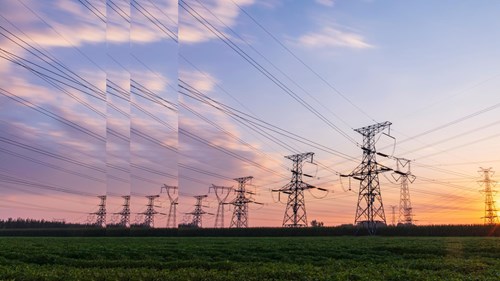
Data centres are characterised by high and continuous power consumption, which, particularly in commercial facilities, can also be subject to short-term fluctuations. Connection is usually at the high-voltage level, and in some cases also at step-up levels to extra-high voltage. Against the backdrop of a sharp rise in demand for connection capacity – transmission system operators alone are receiving requests in the triple-digit gigawatt range – there is a significant need for reform of the existing allocation procedures.
The Federal Government had already made adjustments to the existing regulatory framework for electricity grid connections by the end of 2025. This includes, in particular, the amendment to the Power Plant Grid Connection Ordinance (‘KraftNAV’), which clarified that energy storage facilities do not fall under the KraftNAV. The aim is to prevent existing grid connection capacities from being blocked by grid connection requests that are not, or not sufficiently, serious, which would lead to data centres and other grid connection applicants with high power requirements being prevented from connecting for years. The Federal Government intends, in this context, to ensure the seriousness of connection requests, transparency regarding available grid connection capacity, and a predictable and demand-oriented management of the expansion of connection capacity through a new reservation mechanism that focuses on project progress.
It was also announced that the Federal Government will present proposals for tendering procedures in both the transmission and distribution networks, bringing together reservation logic, site selection and technical requirements. The aim is to create greater transparency and introduce a toolkit for targeted and context-specific reservation mechanisms.
Another focus is on establishing flexible grid connection agreements. A legal framework for this was already created as part of the so-called ‘peak electricity package’ (Stromspitzen-Paket), which enables grid connection agreements that reduce the maximum permissible withdrawal or injection capacity, thereby allowing grid connections (with restrictions) despite limited capacity. Data centres can also be connected in this way when grid capacity is limited, provided that the planned use of the data centre in question is compatible with the restrictions of a flexible grid connection agreement. The Federal Government plans to promote the development of model agreements as an industry standard.
II. Strengthening Germany as a sustainable data centre location
The second objective in the ‘Energy and Sustainability’ action area is to establish Germany as a location for particularly sustainable and energy-efficient data centres. The focus here is on achieving a fully renewable energy supply from 2027 onwards, reducing emissions, and the responsible use of resources, particularly water for cooling processes.
To achieve this objective, the Federal Government is relying on intensified dialogue between the data centre and energy sectors in order to unlock cooperation potential in the expansion of renewable energies and in self-supply models. These measures are intended to support the obligation, already laid down in Section 11(5) of the Energy Efficiency Act (‘EnEfG’), to meet the electricity requirements of data centres entirely from renewable energy sources by 2027 at the latest. The Federal Government plans to introduce relief measures regarding the requirements for actual energy efficiency values, the so-called PUE values, which in practice pose major challenges for data centre operators, particularly because, especially in so-called co-location or co-hosting scenarios, operators often have only limited influence over customers’ usage and energy needs. The same applies where, due to sector-specific requirements, backup data centres are maintained; these are only used to a limited extent because of their backup function and may therefore show poorer PUE values. The planned relaxations regarding PUE values are currently being addressed in a legislative process to amend the Energy Efficiency Act (EnEfG).
Another focus is on improving the framework conditions for the use of waste heat. As suitable heating networks have often been lacking to date, municipal heat planning – which was already introduced nationwide during the previous legislative period through the Heat Planning Act – is intended to support the expansion of the relevant infrastructure. Municipal heat planning serves to systematically record heat demand and plan local heating infrastructure. The aim is to transition the heat supply to greenhouse gas neutrality by 2045.
III. Ensuring competitive electricity prices
To address the high electricity costs in Germany compared to the rest of the EU, the Federal Government is focusing on various measures under the third objective of ensuring competitive electricity prices, aimed at making electricity prices for data centres internationally competitive.
This includes, in particular, the continuation of government relief measures to reduce energy costs, such as the existing absorption of EEG costs via the federal budget or subsidies for transmission network costs, which benefit electricity consumers and thus also data centres. The Federal Government also plans to secure the long-term financing of such relief measures. It remains to be seen whether this will be sufficient to offset disadvantages in terms of electricity costs compared to countries and regions with lower electricity costs, and thus continue to incentivise particularly energy-intensive data centres for AI applications.
Another approach involves incorporating data centres into existing electricity price compensation schemes. The aim is to relieve companies of indirect CO₂ costs and prevent computing capacity from being relocated to countries outside Europe. The design of such schemes must comply with EU state aid rules, which must be observed to safeguard competition within the EU internal market.
Against this backdrop, companies should familiarise themselves with the key elements of the data centre strategy and the individual areas of action. In addition, current developments, in particular the implementation of the data centre strategy’s provisions in specific legislative proposals, should be monitored. In this Noerr series of articles, we are closely tracking these developments. The following second part of the series examines Action Area 2 of the data centre strategy, ‘Location and Space’, in greater detail.




Well
informed
Subscribe to our newsletter now to stay up to date on the latest developments.
Subscribe nowInsights